Artificial intelligence is rapidly transforming how businesses operate. In 2026, AI agents are becoming essential tools for small businesses that want to automate repetitive tasks, reduce operational costs, and increase productivity.
Unlike traditional automation software, AI agents can analyze data, make decisions, and perform tasks autonomously. These intelligent systems can handle activities such as market research, customer support, workflow automation, and even software development.
For small businesses with limited staff and tight budgets, AI agents act like digital employees that work continuously without breaks. By implementing the right AI automation tools, businesses can focus more on growth and strategy instead of routine tasks.
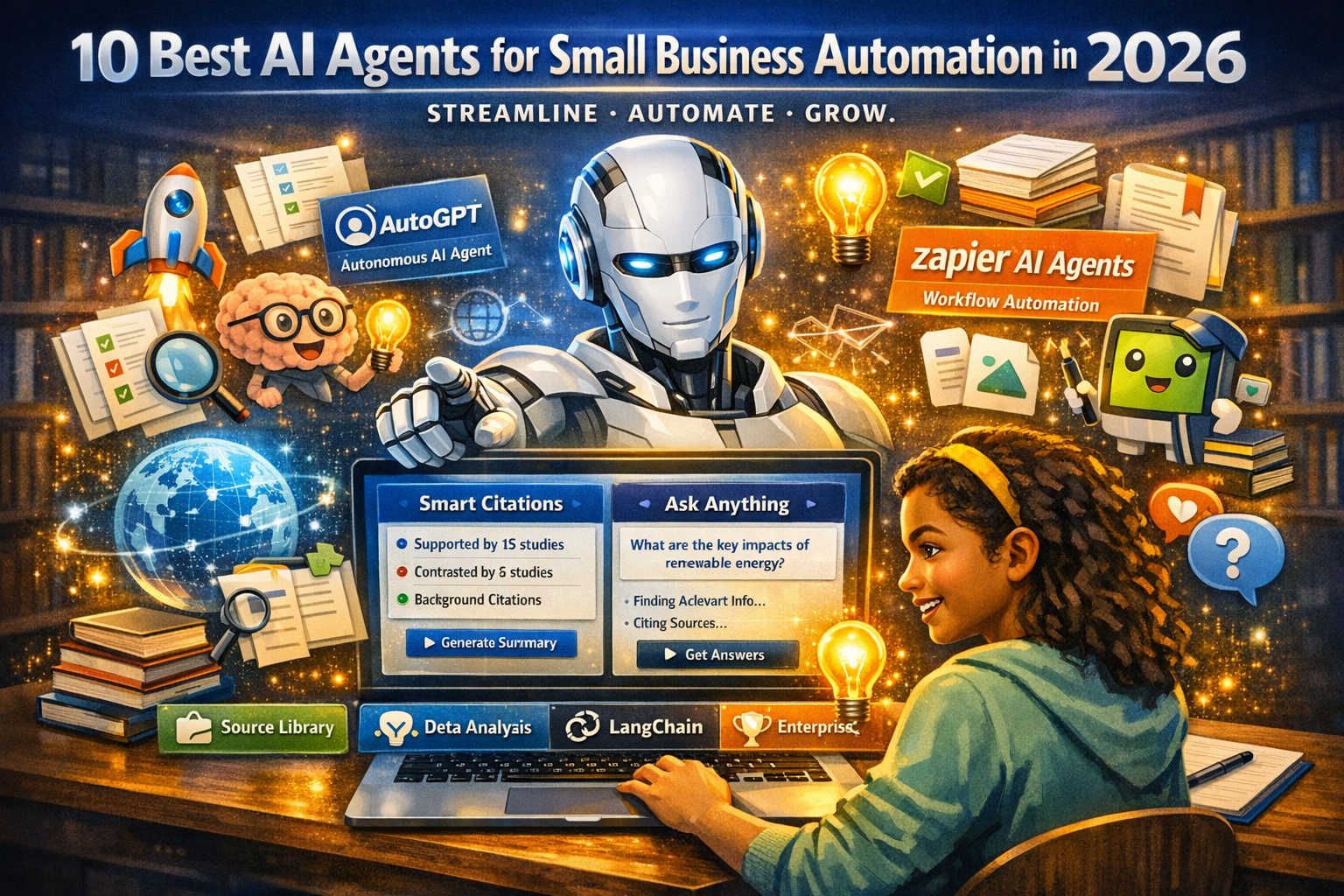
In this guide, we explore the 10 best AI agents for small business automation in 2026 and how each tool can help improve efficiency and productivity.
What Are AI Agents for Small Business?
AI agents for small businesses are intelligent software systems that can perform tasks automatically using artificial intelligence. These agents can understand goals, analyze information, and execute workflows with minimal human supervision.
For example, an AI agent might automatically respond to customer emails, research competitors, generate marketing content, or schedule social media posts.
Because of their ability to automate complex tasks, AI agents are becoming one of the most valuable technologies for entrepreneurs and startups.
Many professionals also use AI for productivity and learning. You can explore our detailed guide on Best AI Tools for Students in 2026 to discover more powerful AI tools.
1. AutoGPT – Autonomous AI Agent for Business Automation

AutoGPT is one of the earliest autonomous AI agents for small business automation designed to perform tasks independently. Unlike traditional tools that require constant user input, AutoGPT can take a high-level objective and automatically break it into smaller tasks.
For example, a business owner might ask AutoGPT to research competitors, analyze market trends, and suggest marketing improvements. The AI agent will automatically search the web, gather relevant data, and generate useful insights that help improve business strategies.
Because of its autonomous capabilities, AutoGPT is becoming a powerful tool for entrepreneurs looking to use AI agents for small business productivity and automation.
Key Features
- Autonomous task execution
- Web research capabilities
- Long-term memory for ongoing projects
How Businesses Use AutoGPT
Many companies use AutoGPT as one of the most powerful AI agents for small business automation. It helps entrepreneurs perform market research, plan content strategies, and analyze competitors more efficiently.
Pros
- Highly autonomous
- Powerful research capabilities
Cons
- Requires technical setup
- Needs occasional supervision
2. AgentGPT – Beginner-Friendly AI Agent
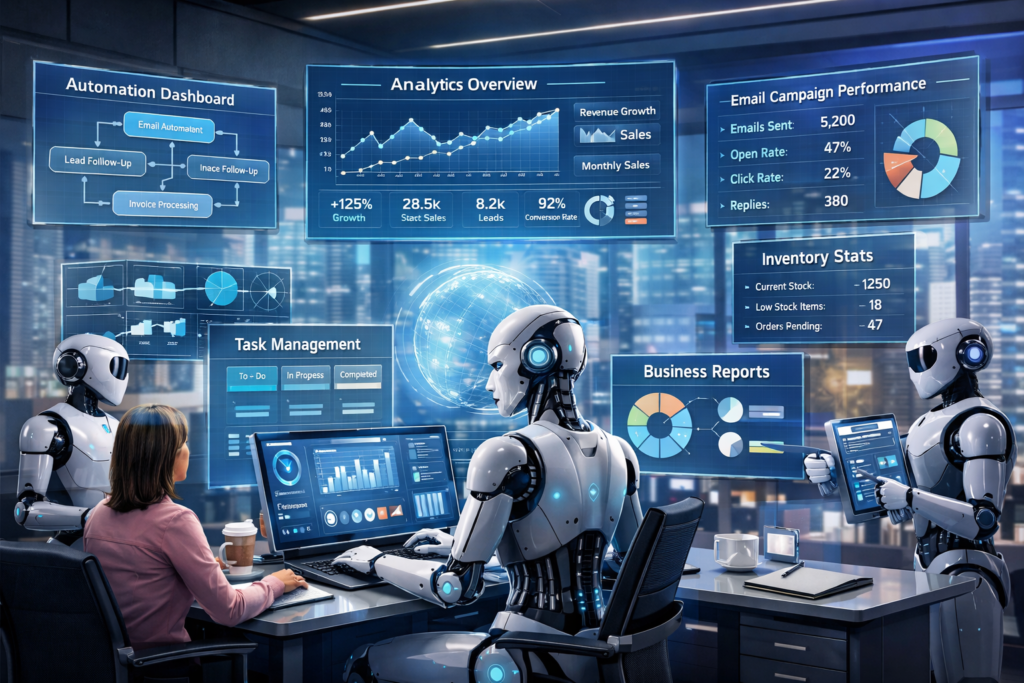
AgentGPT allows users to create and run AI agents directly inside a web browser. This makes it one of the easiest AI automation tools for beginners.
Users simply define a goal, and the AI agent begins executing tasks step by step until the objective is completed.
For example, a small business owner can instruct AgentGPT to create a 30-day social media marketing plan. The AI agent will generate ideas, organize them into a schedule, and suggest posting strategies.
Key Features
- Simple browser-based interface
- No coding required
- Real-time task automation
Pros
- Beginner friendly
- Quick setup
Cons
- Limited advanced automation features
3. Zapier AI Agents – Workflow Automation for Businesses

Zapier has long been known as a platform that connects different applications and automates workflows. With the introduction of AI-powered automation, Zapier now provides powerful AI agents for small business automation that help companies streamline their daily operations.
Zapier AI agents can automatically trigger workflows between thousands of applications such as email platforms, CRM systems, project management tools, and marketing software. This allows businesses to automate repetitive tasks without manual effort.
For example, when a customer fills out a website form, the AI agent can instantly add the lead to a CRM system, send a personalized welcome email, and schedule a follow-up task. This type of automation makes Zapier one of the most useful AI agents for small business productivity and workflow management.
Key Features
- Integration with 6000+ applications
- Automated triggers and workflow automation
- Smart task automation for business processes
Pros
- Reliable automation platform
- Massive app integration ecosystem
Cons
- Pricing may increase with heavy usage
4. Adept AI – Software Interaction AI Agent
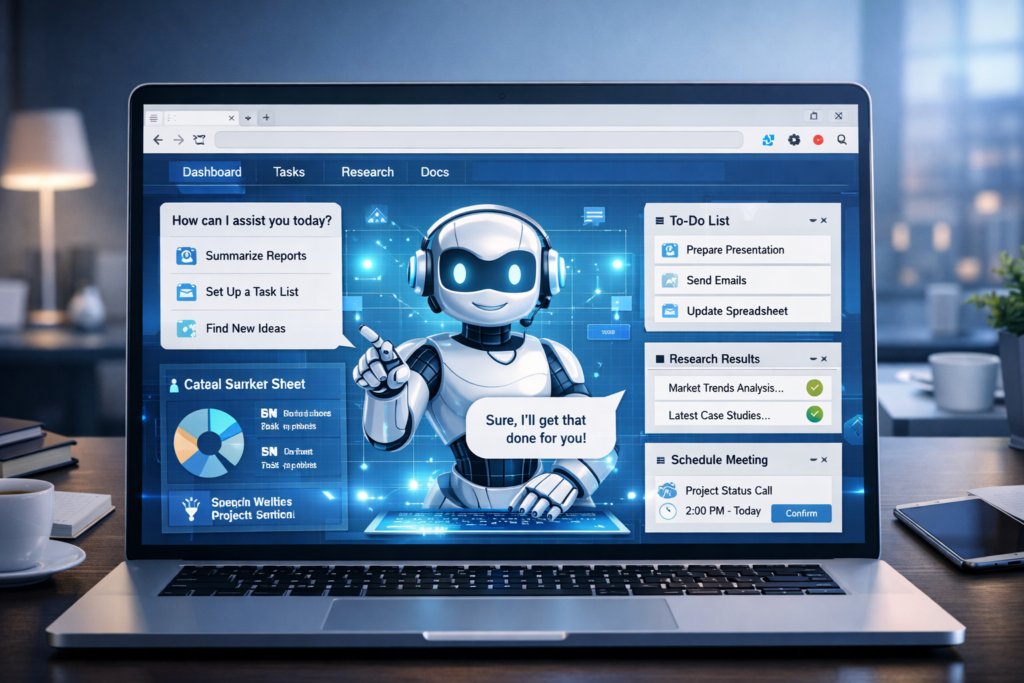
Adept AI is designed to interact with software interfaces just like a human user. It can navigate applications, click buttons, and perform complex workflows inside different software platforms.
This type of AI agent is particularly useful for businesses that rely on legacy software systems where traditional automation tools cannot easily integrate.
For example, a logistics company might use Adept AI to process shipping orders automatically within internal systems.
Key Features
- Software interface automation
- Cross-application task execution
- AI trained to understand digital workflows
Pros
- Works across many applications
- Reduces manual data entry
Cons
- Limited public availability
5. Devin AI – Autonomous Software Development Agent
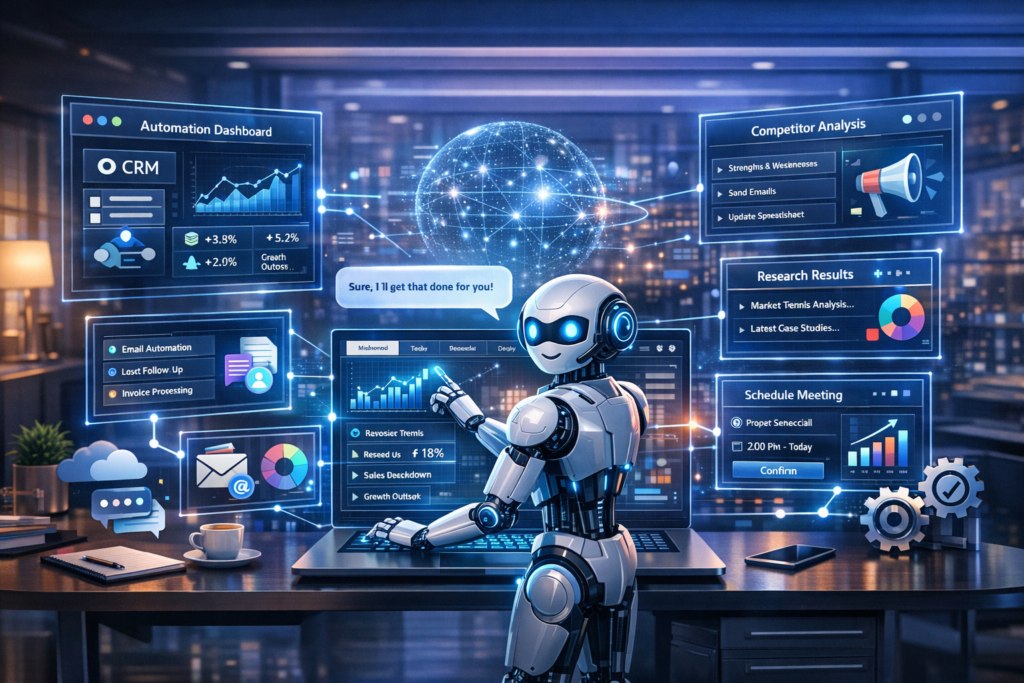
Devin AI is an advanced AI agent designed to function as an autonomous software engineer. It can write code, debug programs, and deploy applications.
For small businesses that need custom software tools but lack in-house developers, Devin AI can act as a powerful assistant.
For example, Devin AI can build internal automation tools, create scripts, and test software systems automatically.
Key Features
- Code generation and debugging
- Full development environment
- Automated testing and deployment
Pros
- High-level programming capabilities
- Can build complete applications
Cons
- Expensive for some businesses
Many professionals also use AI for productivity and learning. You can explore our detailed guide on Best AI Tools for Students in 2026 to discover more powerful AI tools.
6. ChatGPT Custom AI Agents for Business

Businesses can now create custom AI agents using the ChatGPT platform. These agents can be trained with internal documents, company guidelines, and support resources.
Once configured, the AI agent can perform tasks such as answering customer questions, drafting emails, summarizing documents, and generating marketing content.
For example, a small e-commerce company might create a ChatGPT agent that automatically responds to customer inquiries.
Key Features
- Custom knowledge base
- Content generation
- Customer support automation
Pros
- Easy to create custom assistants
- Flexible business applications
Cons
- Limited to certain integrations
7. Taskade AI Agents for Project Management

Taskade combines project management tools with AI automation. Businesses can create multiple AI agents inside a workspace to assist with research, writing, and planning.
Teams can collaborate with AI agents to organize projects, generate ideas, and convert meeting notes into actionable tasks.
Key Features
- Collaborative AI workspace
- Project automation tools
- Visual mind maps and task management
Pros
- Great for team collaboration
- Powerful productivity features
Cons
- Interface may feel complex for beginners
8. CrewAI – Multi-Agent Collaboration Platform
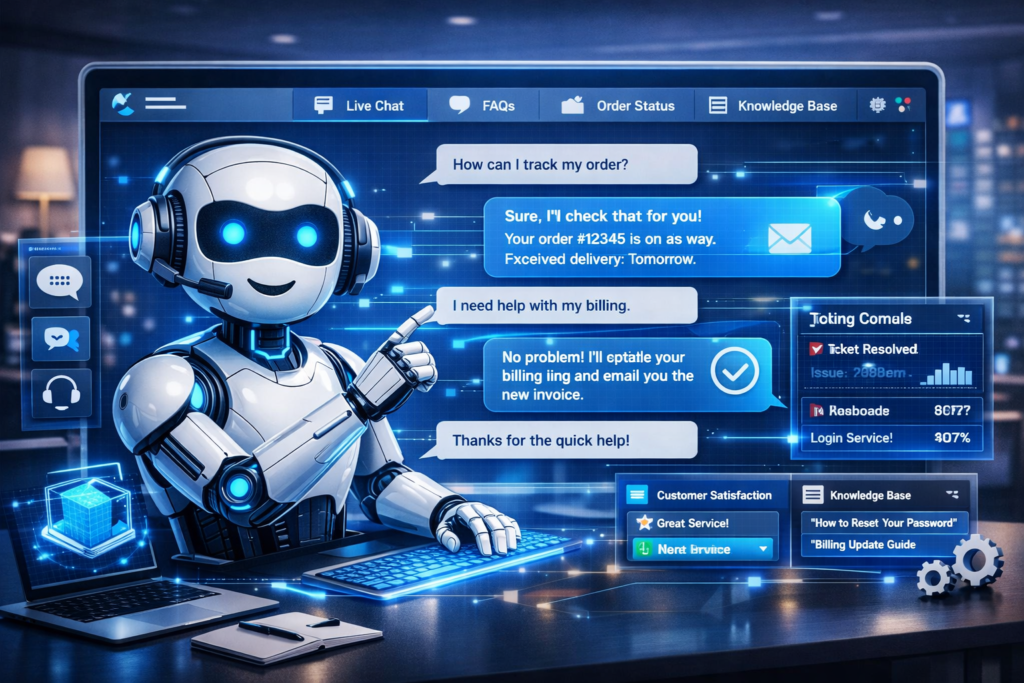
CrewAI allows multiple AI agents to collaborate on a project by assigning different roles to each agent. For example, one agent might perform research while another writes content and a third reviews the results.
This multi-agent system enables businesses to automate complex workflows that require multiple stages.
Key Features
- Role-based AI agents
- Multi-agent collaboration
- Advanced workflow automation
Pros
- Produces high-quality results
- Ideal for research and analysis
Cons
- Requires technical knowledge
9. LangChain AI Agents Development Framework
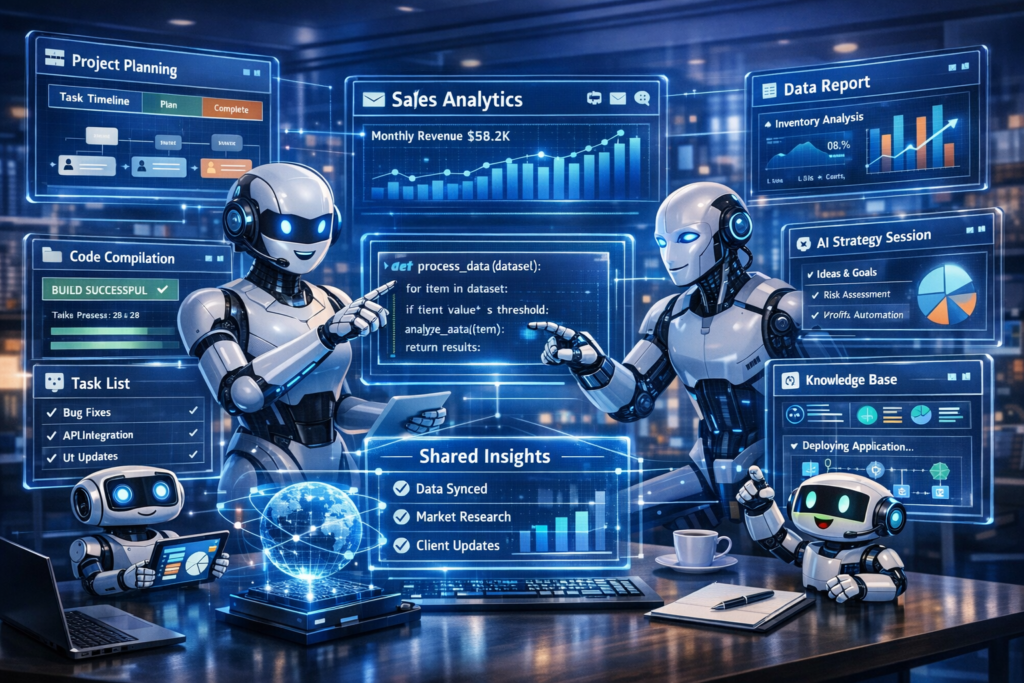
LangChain is a powerful framework used by developers to build custom AI agents. It connects different language models, tools, and data sources to create advanced AI automation systems.
Businesses that need highly customized AI workflows often rely on LangChain to develop unique solutions.
Key Features
- Modular AI architecture
- Multi-model integration
- Custom workflow creation
Pros
- Extremely flexible
- Ideal for building custom AI tools
Cons
- Requires programming experience
10. SuperAGI – Enterprise AI Agent Platform

SuperAGI is an open-source platform designed to manage large-scale AI agent systems. Businesses can create, monitor, and optimize multiple AI agents from a centralized dashboard.
This platform is ideal for companies that want to scale AI automation across multiple departments.
Key Features
- Multi-agent management system
- Performance monitoring tools
- Cost optimization features
Pros
- Scalable automation platform
- Open-source flexibility
Cons
- Advanced setup required
Many professionals also use AI for productivity and learning. You can explore our detailed guide on Best AI Tools for Students in 2026 to discover more powerful AI tools.
Benefits of AI Agents for Small Businesses
AI agents provide several important advantages for modern businesses.
Increased Productivity
AI agents can operate continuously, allowing businesses to complete tasks faster and more efficiently.
Reduced Costs
Automation reduces the need for additional staff to handle repetitive tasks.
Improved Customer Support
AI agents can instantly respond to customer inquiries and provide support around the clock.
Business Scalability
Businesses can expand operations without significantly increasing operational costs.
Final Thoughts
AI agents are becoming essential tools for modern businesses. They help automate repetitive processes, improve productivity, and reduce operational expenses.
For small businesses, adopting the right AI agents can create a significant competitive advantage. By starting with a few automation tools and gradually expanding AI capabilities, businesses can streamline operations and focus more on innovation and growth.